
The Legacy of the World’s Greatest Stage
How the FIFA World Cup 2026 Transcends Sport to Become a Global Celebration of Culture, Influence, Business, Beauty, and Human Connection.
On any given afternoon in Miami, a waterfront terrace brings together people who, under ordinary circumstances, might never have crossed paths. An Argentine entrepreneur discusses a controversial play while sharing a glass of wine with a Canadian investor. Nearby, a Colombian designer exchanges ideas on business, innovation, and global trends with a Japanese executive. They come from different worlds, speak different languages, and carry different cultural traditions. Yet the moment the ball finds the back of the net, they all react in exactly the same way.
For a few brief seconds, language, distance, and differences disappear. What remains is pure emotion.
Perhaps that scene, repeated thousands of times across restaurants, private clubs, luxury hotels, airports, rooftops, and homes around the world, explains the true magnitude of the FIFA World Cup better than any statistic ever could. Beyond record-breaking audiences, billion-dollar revenues, and global headlines, there exists a profoundly human phenomenon that continues to captivate the world generation after generation.
While our attention is naturally drawn to the players on the field, the real story unfolds far beyond the stadium walls. It lives in the host cities welcoming visitors from every continent. It thrives in hotel lobbies where entrepreneurs, journalists, athletes, and travelers unexpectedly find themselves sharing conversations. It emerges in spontaneous connections between people who discover common ground despite being shaped by entirely different cultures and experiences. Above all, it reminds us that the world is far smaller and far more connected than we often imagine.
The 2026 FIFA World Cup arrives at a defining moment in history. We live in an era driven by technology, connected by instant communication, and overwhelmed by an endless flow of information. Yet few experiences still possess the power to generate genuine collective emotion on a global scale. The World Cup remains one of those rare exceptions. For a few extraordinary weeks, humanity participates in a shared conversation where national pride, cultural appreciation, and a sense of global belonging coexist in remarkable harmony.
That duality is what makes this event so fascinating. On one hand, we celebrate our roots, our colors, our traditions, and the identities that define us. On the other hand, we are reminded that we have far more in common than we often realize. The flags that fill stadiums represent unique nations, histories, and cultures, yet together they form a global mosaic that only achieves its full meaning when every piece is present. The greatness of the World Cup has never been about eliminating differences. It has always been about demonstrating that those differences can coexist within a single celebration.
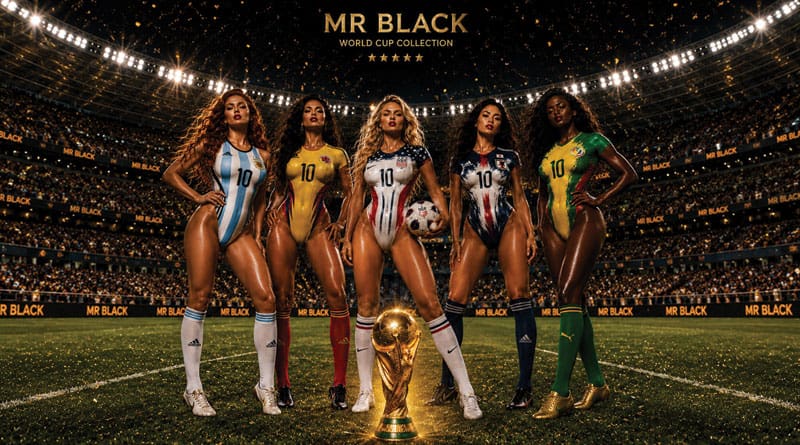
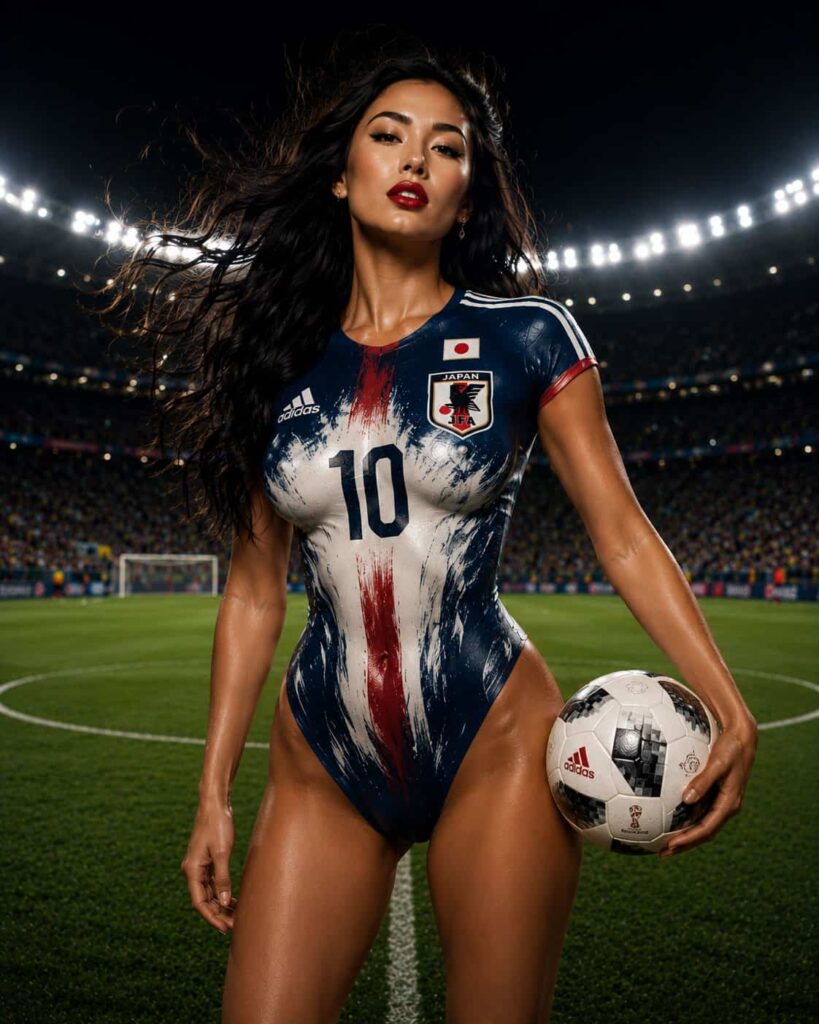
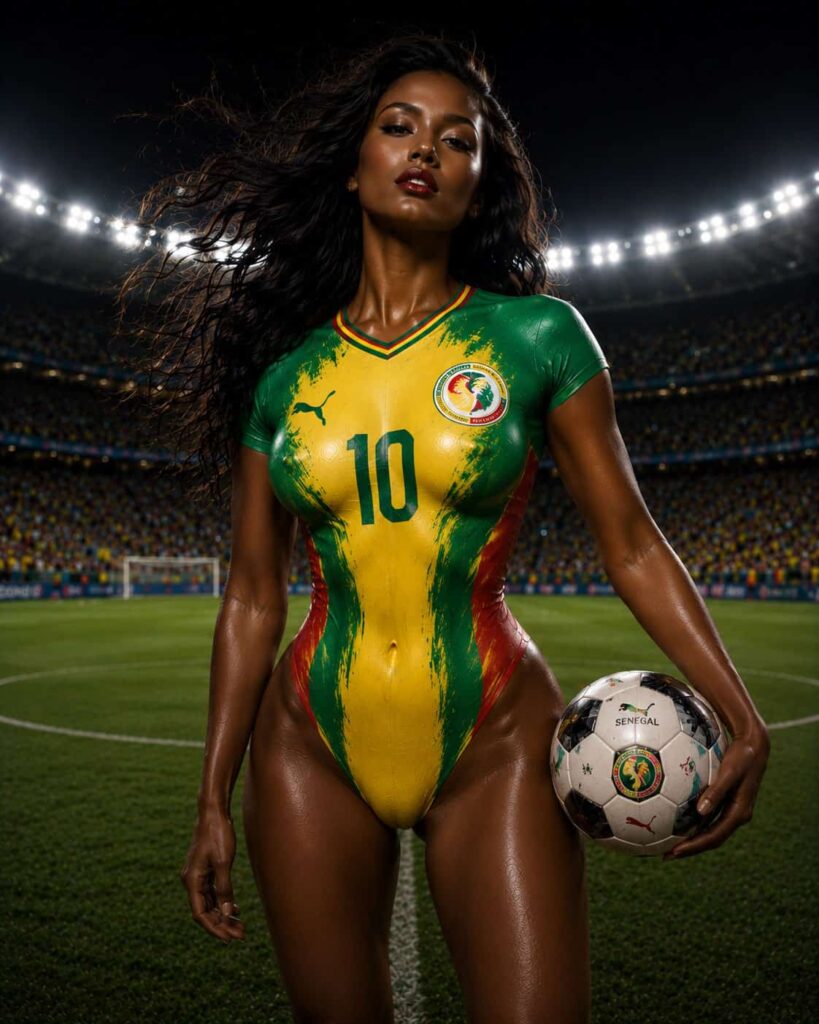
The image accompanying this special edition of MR BLACK WORLD perfectly reflects that philosophy. Five women represent five different nations. Each embodies a distinct form of beauty, character, and cultural heritage. Their stories are unique, their identities unmistakable. Yet when they stand together on the same stage, they become something greater than the sum of their individual backgrounds. They become a symbol of what is possible when diverse cultures come together, not in competition, but in mutual admiration and shared experience.
Perhaps that is why the true legacy of a World Cup can never be measured solely by the team that lifts the trophy. Champions will earn their place in sporting history, but the event’s deepest impact will live elsewhere. It will endure in the friendships formed during the tournament, in the business opportunities created through unexpected encounters, in the host cities that opened their doors to the world, and in the countless stories that will continue to inspire long after the final whistle has been blown.
Great leaders understand that success exists on different levels. There is individual success, measured by personal achievement and accomplishment. Then there is a higher level of success one defined by the ability to inspire, connect, and create value for others. In many ways, the FIFA World Cup represents that philosophy on a global scale. It is a fiercely competitive event, yet it is also a shared celebration. It is a stage where everyone strives to win, but where the ultimate victory lies in proving that excellence has the power to unite people regardless of nationality, language, or background.

When the stadium lights finally dim and the world returns to its daily routine, something far more valuable than the outcome of a final match will remain. The memory of having participated in one of the very few events capable of bringing humanity together around a common emotion. In an age where our differences often dominate the conversation, that may be the most important lesson of all.
Because in the end, the world’s greatest stage does not belong to football alone.
It belongs to people.
To their stories.
To their dreams.
To their ability to compete, celebrate, and coexist.
It belongs to a humanity that, for a few unforgettable weeks, stops seeing itself as a collection of nations and begins to recognize itself as a single global community.
And perhaps that is the greatest championship of all.
Publisher: Wilson Pacateque MR BLACK MAGAZINE
Don’t miss a kick with live scores, highlights and news: FIFA World Cup 2026™